
Dwarf 3 Instrument
-
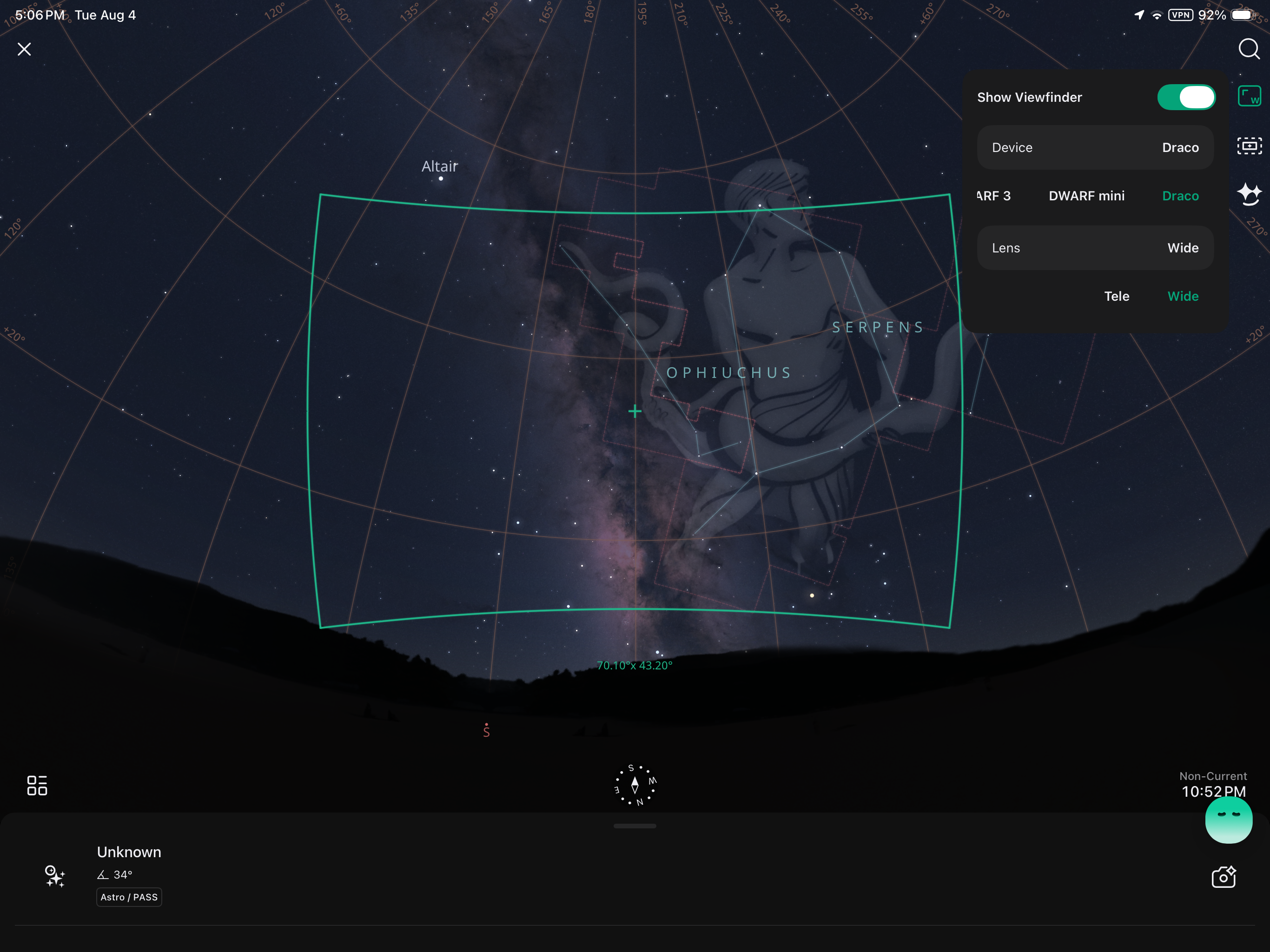
DWARFLAB Draco: Reverse Engineering a Rumored Telescope From Six Independent Clues
A telescope named Draco showed up inside the DWARFLAB app with no announcement. On its own, that would be a curiosity. Lined up against a patent, a wide-angle spec, and a trade show teaser, it starts to look like an engineering trail worth following.
-

DWARF 3 Squid Nebula (Ou4): Why the Duo-Band Filter Can’t Detect It
I had 21.5 hours of data on the Squid Nebula and a decision to make: keep shooting it, or give up and point the scope somewhere else. Ou4 is one of the faintest things an amateur telescope can attempt. It is nicknamed the Squid Nebula for its long, ghostly, tentacle-like lobes. I couldn’t tell from…
-

Seventeen hours on the Squid Nebula (OU4) and the blue I wanted to see
The giant squid (the deep sea creature, not the squid nebula) spent most of a century as the animal everyone knew was down there and almost nobody could photograph. There were beaks cut from sperm whale stomachs, severed arms hauled up in nets, the occasional carcass rolled onto a beach, every bit of it proof…
-

Leo Triplet with the DWARF 3: 4h 38m First Pass from Bortle 6
A one-night DWARF 3 session on the Leo Triplet from Bortle 6 skies. 278 subs at 60 seconds, gain 50, Astro filter, 4h 38m stacked. All three galaxies resolved, the NGC 3628 dust lane survived, and the target earned a longer return visit next galaxy season.
-
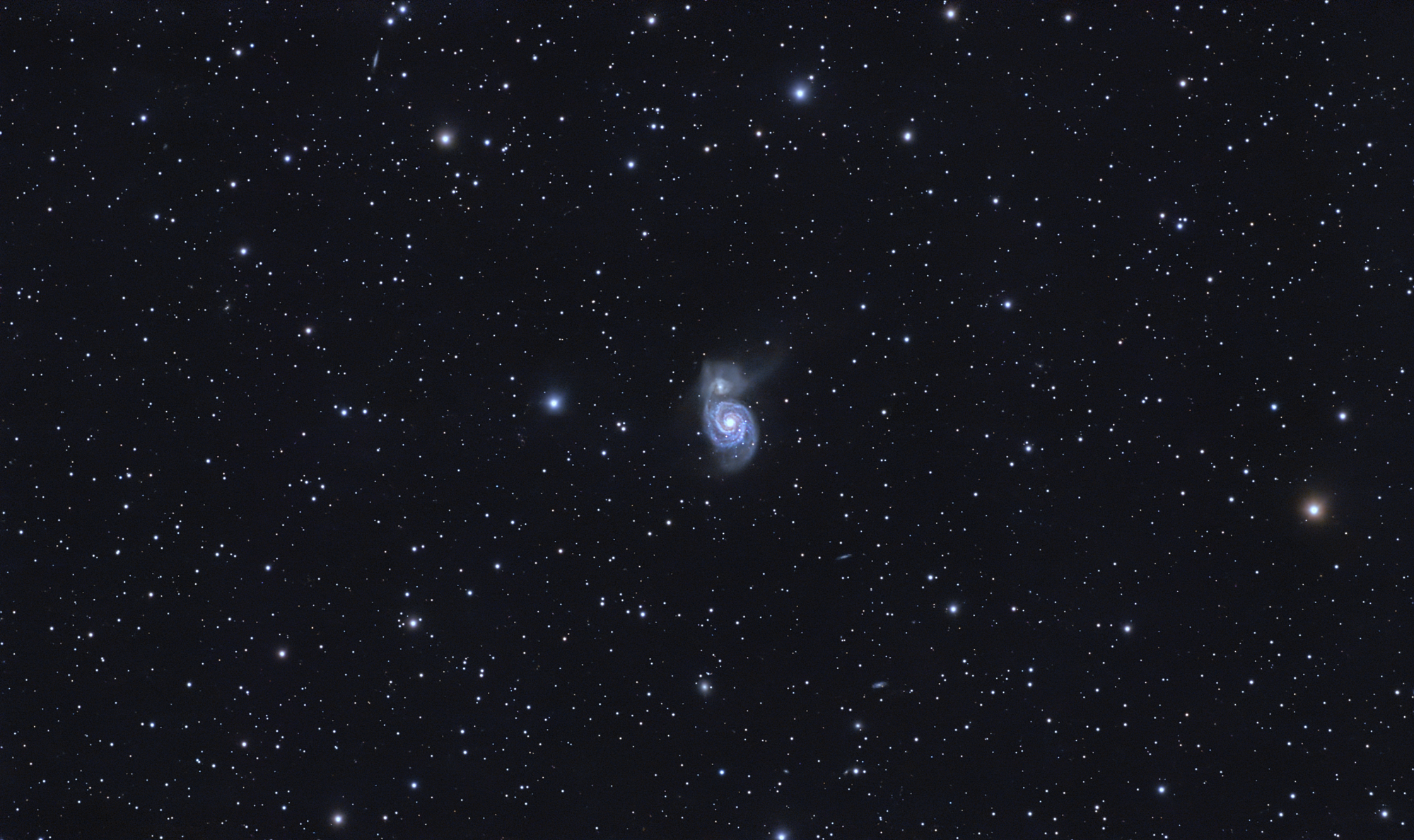
Whirlpool Galaxy M51 with the DWARF 3: 8h 14m Across Three Sessions
The first time I pointed the DWARF 3 at M51 was August 14th last year. Eight and a half minutes, Alt-Az mode, gain 60, Astro filter. Both galaxies showed up and the arms were there in rough form, but nothing resolved. I noted it and came back in April 2026. The months between went into…
-
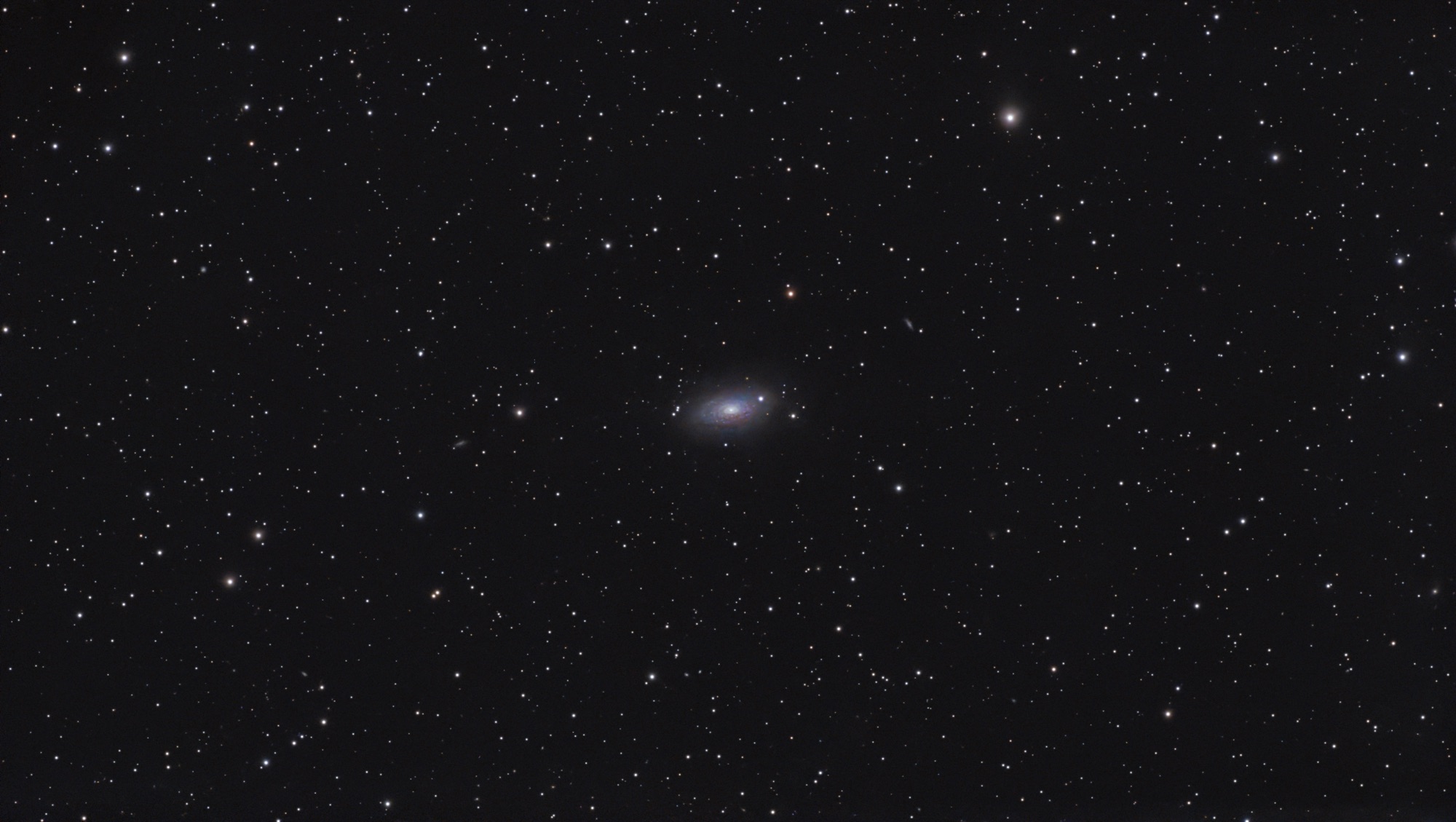
M63 Sunflower Galaxy with the Dwarf 3: 4h 50m from Bortle 6
A 4 hour 50 minute integration of M63, the Sunflower Galaxy, from a Bortle 6 backyard using the DwarfLab Dwarf 3 in EQ mode with Astro filter and temperature-matched dark frames.
-

Star Trails with the Dwarf 3: First Test of Star Trail Mode (720 × 30s)
DwarfLab recently added a dedicated Star Trail Mode to the Dwarf 3 app. This is my first test of it. 720 frames at 30 seconds each, six hours total, stacked in real time by the app with no post-session processing required.
-

Why DWARF 3 Images Look Blurry or Noisy: Understanding Signal vs. Noise
First images from the DWARF 3 often appear noisy or faint because they are raw data measurements rather than finished photographs. To improve image quality, you must manage the signal-to-noise ratio through correct exposure settings, gain balance, and long total integration times.
-

DWARF 3 Smart Telescope: Is It a Toy or a Real Astrophotography Tool?
The DWARF 3 smart telescope is a compact, uncooled CMOS instrument designed for automated astrophotography. Its performance is governed by aperture size, sensor thermal noise, and signal-to-noise ratio — not automation.