

Astrophotography with the DWARF 3 smart telescope
Struggling to get clean astrophotography images with your DWARF 3? Discover what settings and processes work to produce deep-sky results.
Explore the universe with us
DWARF Astro is a technical astrophotography resource built around the DWARFLab DWARF 3 smart telescope. The site combines real imaging sessions, exact settings, calibration guidance, and processing workflows to help you get better results on galaxies, nebulae, and the Sun.

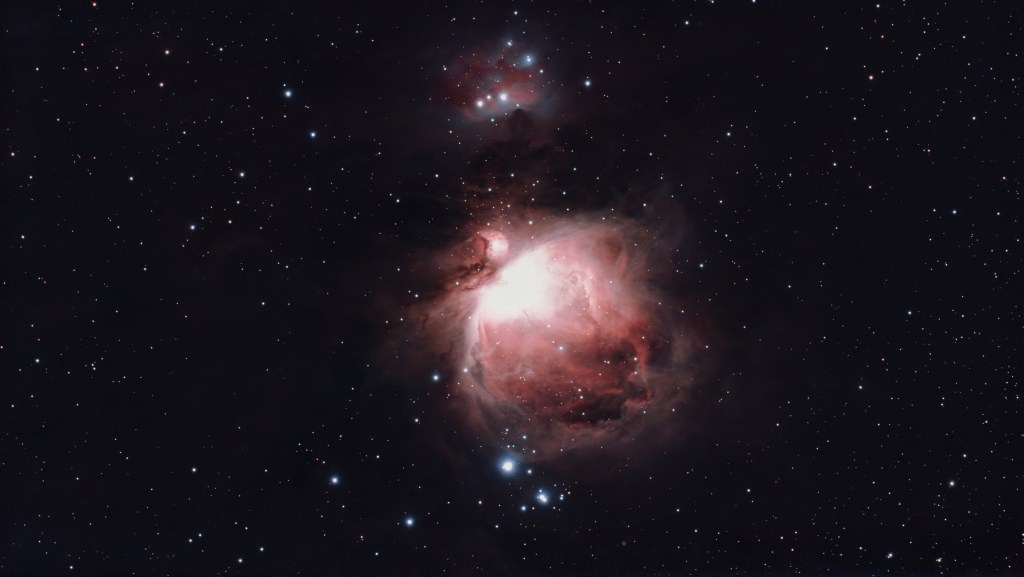
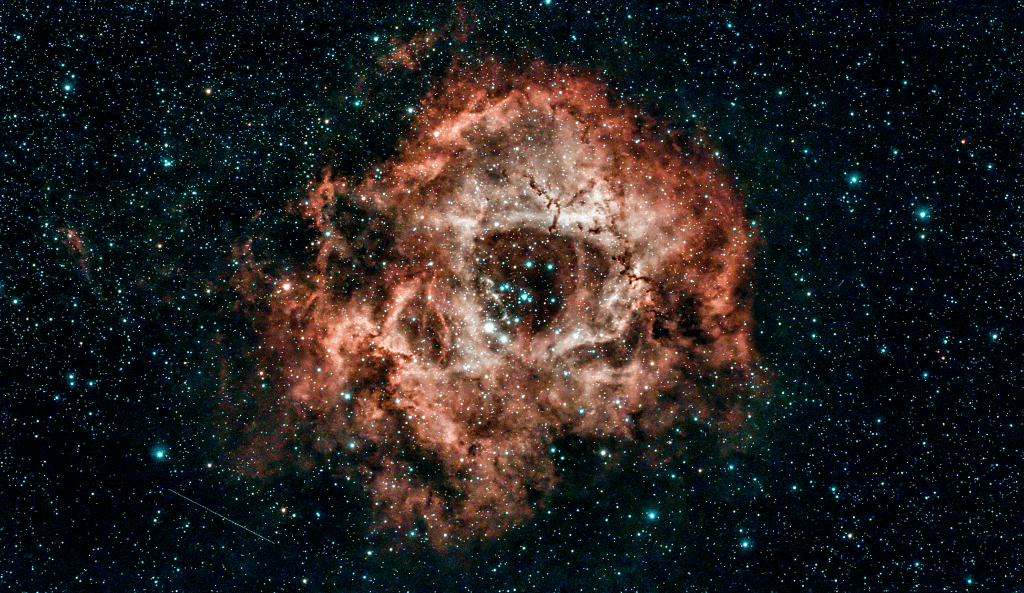
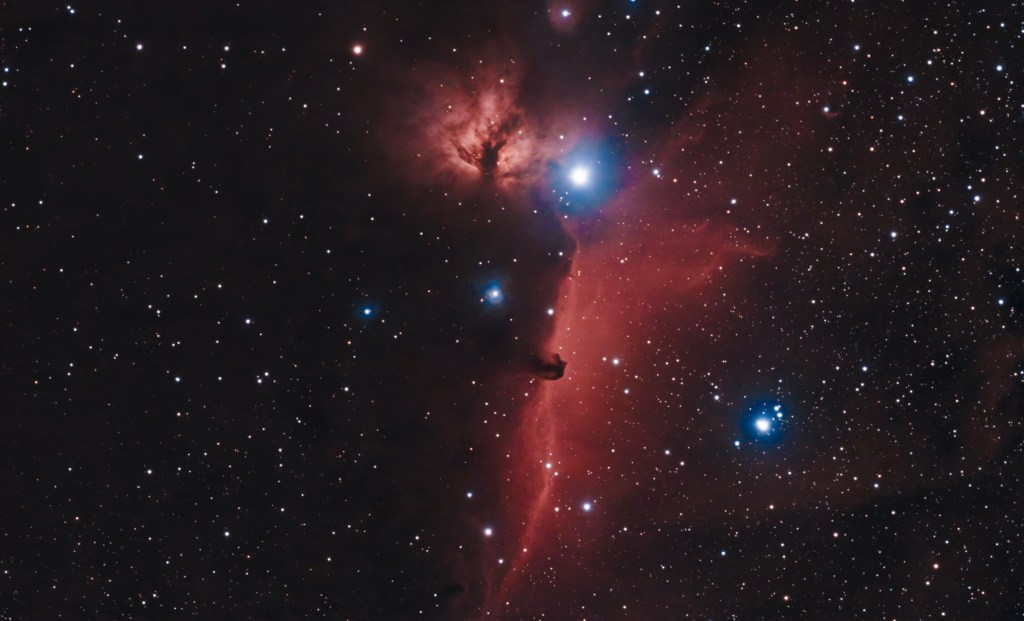
Latest Guides and Session
- DWARFLAB Draco: Reverse Engineering a Rumored Telescope From Six Independent Clues
 A telescope named Draco showed up inside the DWARFLAB app with no announcement. On its own, that would be a curiosity. Lined up against a patent, a wide-angle spec, and a trade show teaser, it starts to look like an engineering trail worth following.
 - Elephant’s Trunk Nebula (IC1396) with the DWARF 3: 5 Hours on a Star-Forming Globule
 The Elephant’s Trunk Nebula, IC1396, is a dark cloud with dozens of new stars condensing inside it right now,… Read more: Elephant’s Trunk Nebula (IC1396) with the DWARF 3: 5 Hours on a Star-Forming Globule
 - Crescent Nebula (NGC 6888) with the DWARF 3: 13 Hours on One of the Rarest Light Shows in the Sky
 The Crescent Nebula, NGC 6888, is a shell of glowing gas being shaped right now by a star passing… Read more: Crescent Nebula (NGC 6888) with the DWARF 3: 13 Hours on One of the Rarest Light Shows in the Sky
 - Shooting the Milky Way with the DWARF 3: Our Home Galaxy from Bortle 6
 Our own galaxy is the one target I could never actually see. From my Bortle 6 backyard the Milky… Read more: Shooting the Milky Way with the DWARF 3: Our Home Galaxy from Bortle 6
 - DWARF 3 Squid Nebula (Ou4): Why the Duo-Band Filter Can’t Detect It
 I had 21.5 hours of data on the Squid Nebula and a decision to make: keep shooting it, or… Read more: DWARF 3 Squid Nebula (Ou4): Why the Duo-Band Filter Can’t Detect It
 - Shooting Sunspots with the DWARF 3: Gain 0, 1/10000s, and a Telescope Running at 127°F
 Three DWARF 3 solar sessions across five days: an exposure bracket at gain 0, an internal filter experiment, and a sunspot complex that dissolved before this post went up. Settings, science, and the full progression.
 - Fireworks Galaxy (NGC 6946) with a DWARF 3: Four Hours of Cosmic Fireworks for America’s 250th
 The light in this image of the Fireworks Galaxy (NGC 6946) left its source about 25.2 million years ago.… Read more: Fireworks Galaxy (NGC 6946) with a DWARF 3: Four Hours of Cosmic Fireworks for America’s 250th
 - Needle Galaxy (NGC 4565 / Caldwell 38) and Its Companion NGC 4562
 I ran 1h 14m on NGC 4565, the Needle galaxy C38, mostly as a check before committing real time… Read more: Needle Galaxy (NGC 4565 / Caldwell 38) and Its Companion NGC 4562
 - Seventeen hours on the Squid Nebula (OU4) and the blue I wanted to see
 The giant squid (the deep sea creature, not the squid nebula) spent most of a century as the animal… Read more: Seventeen hours on the Squid Nebula (OU4) and the blue I wanted to see
 - Whale Galaxy (NGC 4631 / Caldwell 32) with the Pup and the Hockey Stick
 The plan for the week was the Squid, but the Squid needs darkness and it needs hours, more hours… Read more: Whale Galaxy (NGC 4631 / Caldwell 32) with the Pup and the Hockey Stick
 - Leo Triplet with the DWARF 3: 4h 38m First Pass from Bortle 6
 A one-night DWARF 3 session on the Leo Triplet from Bortle 6 skies. 278 subs at 60 seconds, gain 50, Astro filter, 4h 38m stacked. All three galaxies resolved, the NGC 3628 dust lane survived, and the target earned a longer return visit next galaxy season.
 - Whirlpool Galaxy M51 with the DWARF 3: 8h 14m Across Three Sessions
 The first time I pointed the DWARF 3 at M51 was August 14th last year. Eight and a half… Read more: Whirlpool Galaxy M51 with the DWARF 3: 8h 14m Across Three Sessions
 - One Bad Dark Frame Almost Ruined My M13 Hercules Cluster
 At 4:22 in the morning my phone showed me something I couldn’t explain in my M13 Hercules Cluster image.… Read more: One Bad Dark Frame Almost Ruined My M13 Hercules Cluster
 - Maximize Sharpness with DWARF 3 Techniques
 What You Will Learn In this post I cover why DWARF 3 deep-sky images can look soft when zoomed… Read more: Maximize Sharpness with DWARF 3 Techniques
 - Borrowed Light: Capturing M78 Nebula with the DWARF 3
 What You Will Learn In this post I share my February 2026 DWARF 3 image of M78 nebula (aka… Read more: Borrowed Light: Capturing M78 Nebula with the DWARF 3
 - I Pointed an iPhone 17 Pro at the Moon Through a NexStar 8SE. Here Is What Came Back.
 Most people assume that serious lunar or moon photography requires a dedicated astronomy camera, a laptop running capture software,… Read more: I Pointed an iPhone 17 Pro at the Moon Through a NexStar 8SE. Here Is What Came Back.
 - M63 Sunflower Galaxy with the Dwarf 3: 4h 50m from Bortle 6
 A 4 hour 50 minute integration of M63, the Sunflower Galaxy, from a Bortle 6 backyard using the DwarfLab Dwarf 3 in EQ mode with Astro filter and temperature-matched dark frames.
 - Helix Nebula NGC 7293 with the DWARF 3
 A 1 hour 46 minute DWARF 3 session on the Helix Nebula (NGC 7293) using the Duo-Band filter under Bortle 6 skies. Documents the altitude constraint of imaging a southern target from New England, and why sky geometry limits total integration time as much as any other factor.
 - Heart Nebula IC 1805 with the DWARF 3
 A 3 hour 52 minute DWARF 3 session on the Heart Nebula (IC 1805) in Cassiopeia using the Duo-Band filter under Bortle 6 skies. Documents the challenge of imaging a large emission nebula, gradient control across a wide field, and what consistent settings contribute to the result.
 - Horsehead Nebula and Flame Nebula with the DWARF 3A 2 hour 54 minute DWARF 3 session on the Horsehead Nebula (B33) and Flame Nebula (NGC 2024) using the Duo-Band filter under Bortle 6 skies. Documents the challenge of imaging a dark nebula silhouetted against hydrogen-alpha emission and what contrast-driven capture requires.
- Star Trails with the Dwarf 3: First Test of Star Trail Mode (720 × 30s)
 DwarfLab recently added a dedicated Star Trail Mode to the Dwarf 3 app. This is my first test of it. 720 frames at 30 seconds each, six hours total, stacked in real time by the app with no post-session processing required.
 - M101 Pinwheel Galaxy: 6 Hours on a Face-On Spiral with the DWARF 3
 A single-session DWARF 3 imaging project on M101, the Pinwheel Galaxy in Ursa Major. 6 hours and 18 minutes of total integration at 60-second sub-exposures, gain 50, Astro filter, Bortle 6. Documents the return to 60-second subs from 120-second testing, half moon conditions, and the standard processing workflow through Stellar Studio and Snapseed.
 - Astrophotography Insights: 15 Hours on M106 and Its Companions
 A three-session DWARF 3 imaging project on M106, a Seyfert galaxy in Canes Venatici. 15 hours and 31 minutes of total integration, four companion galaxies in the field including NGC 4226 at 340 to 394 million light-years, and a documented workflow from on-device mega stack through Stellar Studio and Snapseed.
 - Processing the Pleiades on the DWARF 3: Why I Add a Snapseed Step After Stellar Studio
 A 30-minute M45 Pleiades capture on the DWARF 3 reveals why running denoise, star correction, and Auto in Stellar Studio then finishing in Snapseed with Adjust, Dehaze, Curves, and White Balance produces cleaner results.
 - M81, 15 Hours, and a Hidden Galaxy: What Longer Exposures Taught Me on the DWARF 3
 A 15-hour DWARF 3 imaging project on M81 and M82 comparing short versus 60-second sub-exposures under Bortle 6 skies, with background galaxy UGC 5210 detected at magnitude 14.88.
Frequently Asked Questions
What is DwarfAstro.com?
DwarfAstro.com is an astrophotography resource site built around the DwarfLab Dwarf 3 smart telescope. It publishes hands-on imaging guides, post-processing workflows, and real-session results from Bortle 6 skies in New England. Every post includes a Run Card documenting the exact session parameters used to produce the featured image.
Who is DwarfAstro.com for?
The site is written for anyone interested in smart telescope astrophotography, from complete beginners setting up their first Dwarf 3 to intermediate imagers looking to improve results through software processing. Content covers both first-session basics and more advanced techniques such as calibration frames, gradient removal, and noise reduction.
What is the DwarfLab Dwarf 3?
The DwarfLab Dwarf 3 is a compact smart telescope that automates tracking, focusing, and image stacking through a companion app. It is designed to produce astrophotography results from suburban and urban locations without requiring prior astronomy experience or a separate equatorial mount.
Do you need dark skies to do astrophotography with the Dwarf 3?
Dark skies improve results but are not required. The guides and processing workflows on DwarfAstro.com are documented from Bortle 6 suburban skies, demonstrating what is achievable without traveling to a dark sky site. With the right stacking and post-processing approach, the Dwarf 3 produces usable results from typical residential locations.
What software is used to process Dwarf 3 images?
DwarfAstro.com workflows use Stellar Studio for in-app processing and Snapseed for finishing. The site also offers FITS Studio at fits.dwarfastro.com, a free browser-based learning tool where you can explore how stretching, histogram adjustment, and other core astrophotography processing concepts work without installing any software.